


Spring Outdoor Activities for Kids: Toys and Play Ideas to Ease the Winter-to-Spring Transition
🌷 When Spring Feels Big for Little Bodies
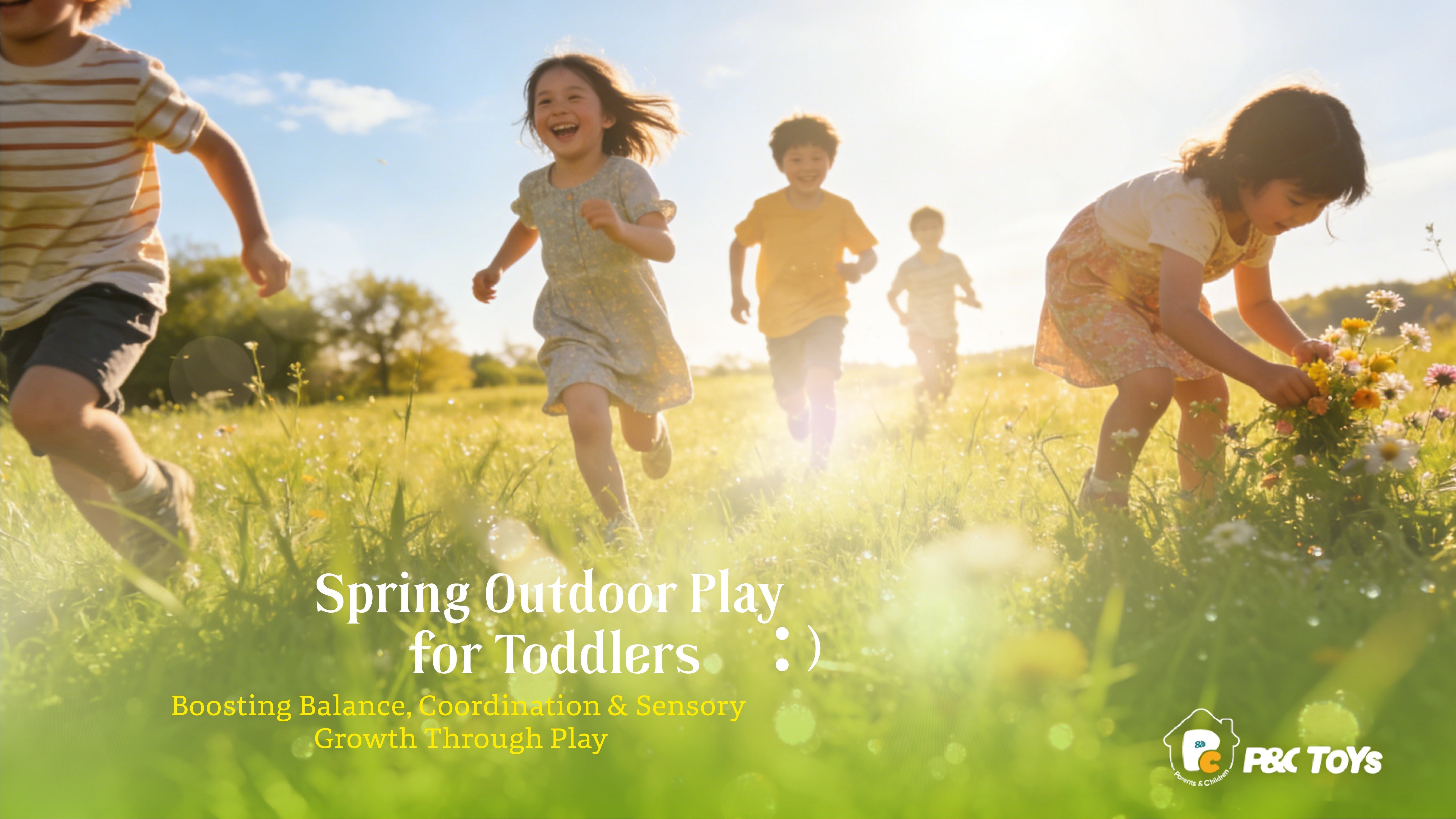
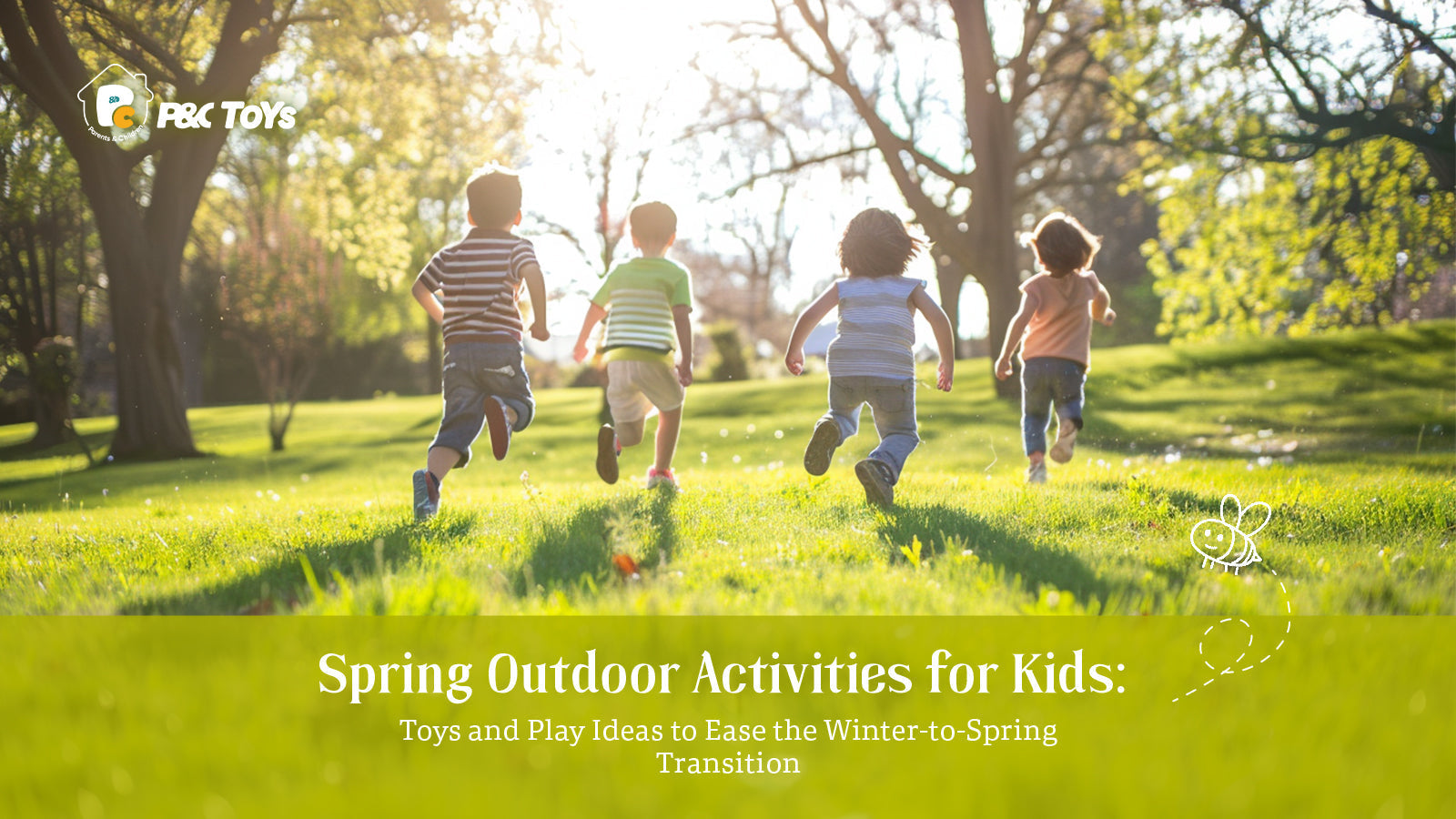
After months of cozy indoor routines, getting kids outside again can feel surprisingly big. The first warm afternoons invite new spring outdoor activities for kids, but the shift from winter indoors to open air isn’t just seasonal — it’s sensory 🌬️
Indoor spaces are predictable and contained. Outdoor spaces are brighter, windier, and constantly moving. Grass feels different from carpet. Light changes quickly. Sounds travel farther. For many children, this sudden expansion of space can feel exciting and overwhelming at the same time.
If your child seems extra energetic, clingy, or emotionally sensitive when trying new outdoor play ideas for spring, it’s not resistance — it’s adjustment.
Spring is a rhythm change. And like any transition, it takes time for children to rebuild comfort in bigger spaces.

🌱 Why Outdoor Play Supports Physical & Sensory Growth
Spring creates a powerful opportunity for physical development in early childhood. After months indoors, children naturally crave more movement — running, steering, pushing, balancing, and turning. These everyday actions become meaningful gross motor activities that rebuild strength and coordination.
At the same time, outdoor sensory play helps their bodies recalibrate. Grass feels different from carpet. Wind shifts direction. Sunlight changes visual depth ☀️ These subtle differences challenge children to adjust balance, posture, and spatial awareness in real time.
Instead of thinking about “just getting kids outside,” it helps to see spring as a rebuilding season:
-
Movement restores strength
-
Nature play for kids encourages independence 🌿
-
Repetition quietly rebuilds confidence
The right toys for outdoor play should support this process — not overwhelm it.

🚗 Types of Toys That Help Kids Transition Outdoors Smoothly
Spring transitions look different at every age. A toddler stepping onto grass for the first time experiences the outdoors very differently from a ten-year-old racing across a park. That’s why choosing the right toys for outdoor play isn’t about complexity — it’s about selecting developmentally appropriate active play toys that guide movement with confidence.
18 Months – 3 Years: Stability Before Speed 👣
For toddlers, outdoor spaces can feel big and unpredictable. At this stage, the goal is steady movement and emotional security. The most helpful outdoor toys for toddlers are the ones that allow slow steering, stopping, and repeating.
Beginner remote control cars or simple push-along vehicles provide predictable motion while naturally supporting:
-
Foundational fine motor activities for toddlers
-
Early balance building with gentle balance toys for toddlers
-
Simple hand-eye coordination outdoor games through visual tracking
A toddler-friendly remote control car for grass or a sturdy cartoon vehicle allows exploration without overwhelm. Repetition builds security — and security builds confidence.
3 – 5 Years: Energy Release & Sensory Joy 🎈
Preschoolers enter spring with more energy and stronger coordination. This stage benefits from dynamic outdoor sensory play and movement-based exploration.
Bubble machines, bubble wands, and bubble guns are especially effective because they combine running, visual tracking, and emotional release in one joyful experience. As children chase bubbles, they naturally engage in:
-
Bigger gross motor activities
-
Visual tracking that strengthens coordination
-
Rhythmic movement that regulates excitement
Bubble play transforms screen free outdoor activities for kids into full-body learning ✨ At this stage, the focus shifts from stability to channeling energy in healthy ways.
6 – 12 Years: Skill, Speed & Outdoor Challenge 🏁
For school-aged kids, spring becomes a season of mastery. Outdoor play ideas evolve from exploration into skill-building challenges.
Drift-style vehicles and remote control cars for grass models introduce precision steering and faster reaction time. These remote control car games for kids help strengthen:
-
Direction control
-
Reaction speed
-
Advanced hand-eye coordination
Here, movement turns into measurable improvement — and exploration grows into mastery.
Across every age group, the principle remains the same: during the winter-to-spring transition, movement comes first. The best toys for outdoor play are not the most complicated ones — they’re the ones that gently guide children toward confidence, coordination, and joyful motion.
🌳 Simple Outdoor Play Ideas by Space
Choosing the right space can be just as important as choosing the right toy. Different outdoor environments offer different levels of stimulation, and understanding that helps make spring outdoor activities for kids feel smoother and more intentional.
Each space supports a slightly different type of movement and play.
-
Backyard 🌼 – A familiar backyard is often the gentlest place to begin. Because the environment feels predictable, it’s ideal for slower movement and low-pressure exploration. This makes it perfect for backyard activities for toddlers, beginner steering practice, bubble play, and other light outdoor sensory activities. Backyards help children rebuild comfort first.
-
Park 🌳 – Parks introduce wider movement and social opportunity. Open fields naturally encourage running, chasing, and cooperative outdoor games for toddlers. This is where active play toys can turn into shared experiences — taking turns steering, racing gently, or chasing bubbles together. These simple interactions support early SEL (Social Emotional Learning) by helping children practice sharing space, waiting their turn, and responding to others’ emotions.
-
Front Yard or Community Space 🚪 – These middle-ground environments allow short sessions of screen free outdoor activities for kids while offering light peer exposure. A quick bubble session or small steering challenge can become a social invitation, helping children build confidence in approaching others.
Outdoor play isn’t just physical. It supports emotional regulation, communication, and social awareness. Through movement and shared play, children begin practicing empathy, cooperation, and self-control — all key components of Social Emotional Learning (SEL).

✨ Why Bubble Play Works Especially Well in Spring
Among all the different types of toys for outdoor play we’ve discussed, there’s one category that deserves special attention — bubble toys for toddlers and kids.
When bubbles float through the air, kids naturally track them with their eyes, strengthening early hand-eye coordination skills 👀. They run, stretch, and jump to catch them, building gross motor strength without even noticing. The movement is active, but gentle. Exciting, but not intense.
That balance matters during seasonal transitions.
Bubble play also fits almost anywhere. Whether it’s backyard activities for toddlers, a park outing, a picnic, or even a small outdoor party, bubbles instantly turn open space into playful motion. No complicated setup. No strict rules. Just fresh air and movement 🌿
Most importantly, bubbles offer something simple and powerful: lighthearted joy. In a season when children are adjusting to bigger spaces and new routines, that kind of playful rhythm helps them feel free — not pressured.
And that’s exactly why bubble play belongs in spring.
🌞 From Winter Indoors to Confident Outdoor Explorers
Spring outdoor activities for kids aren’t about rushing into long days outside. They’re about rebuilding trust in movement — step by step.
With developmentally appropriate toys for outdoor play, children strengthen their bodies, engage in meaningful outdoor sensory play, and practice the social and emotional skills that come from shared experiences. Running, steering, chasing, and laughing together all support growth in ways that feel natural and joyful.
Movement builds confidence. Confidence encourages exploration.
And little by little, winter hesitation turns into curiosity, connection, and joyful spring adventure 🌷
Create Infinite Fun Together.
Q&A
Q1. At what age do toddlers develop empathy?
A: Many toddlers experience an “energy burst” when winter ends. After months indoors, they suddenly have more space, more light, and more stimulation to process — which can lead to restlessness or emotional ups and downs. Spring outdoor activities for kids help release built-up energy while supporting gentle sensory adjustment through movement.
Q2. How do I encourage my toddler to play outside?
A: Start with what we call “bridge toys.” These are familiar, easy-to-use toys for outdoor play that create an instant invitation to play. Bubble machines or beginner remote control cars naturally spark curiosity and make getting kids outside feel exciting instead of forced.
Q3. How can I make a boring park visit fun?
A: Bring a simple “social magnet.” A bubble gun or bubble wand can instantly turn a quiet park visit into interactive outdoor play. Bubble toys for toddlers often attract other children, creating spontaneous chasing games and early Social Emotional Learning (SEL) moments — sharing space, taking turns, and laughing together.
Q4. Why is my child afraid of going outside?
A: Outdoor spaces can feel overwhelming after winter — they’re bigger, louder, and less predictable. Children sometimes need “anchor objects,” like a familiar remote control car or favorite outdoor toy, to feel a sense of control. Having something to hold and steer helps build confidence step by step.
Q5. What are simple ways to help my child become more independent outdoors?
A: Begin with short, consistent outdoor routines and gradually step back. Choose active play toys that encourage self-directed movement — like steering games, chasing bubbles, or simple obstacle paths. As confidence grows through repetition, independent outdoor play becomes more natural.