


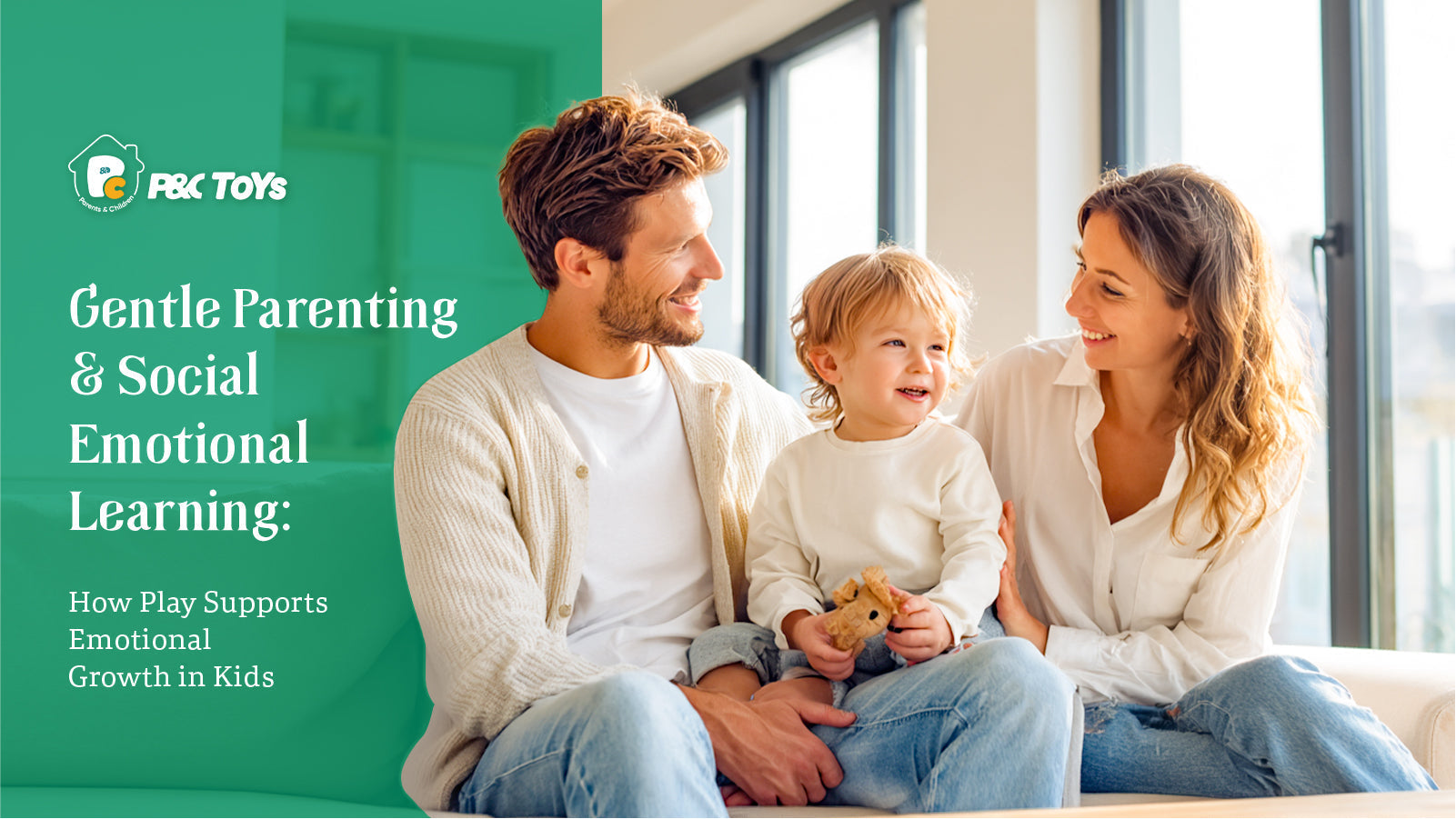
Gentle Parenting & Social Emotional Learning: How Play Supports Emotional Growth in Kids
🌿 Introduction — Parents Want Play to Matter, But Don’t Know How
Play is a big part of childhood. Kids ask for toys, move constantly, and seem to need play as much as snacks and sleep. Yet even in homes filled with toys, many families quietly ask the same question: Is any of this actually helping my child grow?
It’s easy to notice the pattern. A new toy arrives, captures all the attention for a day or two, then slowly fades into the background. Or children jump from one activity to the next, full of energy, while parents wonder what’s really sticking. Play doesn’t need to feel like a lesson—but it shouldn’t feel meaningless either.
This is why so many parents start searching for ideas like learning through play, or browsing for gentle parenting tools and social emotional learning toys. You want play to support more than fun. You want it to support:
-
emotional regulation
-
confidence
-
empathy
-
social skills
But it can be hard to connect the dots between popular concepts like Gentle Parenting, Social Emotional Learning (SEL), and real-life playtime at home.
Here’s the big picture in one simple line:
Gentle Parenting is how you show up. SEL is what your child is building. Learning through play is the path. Emotional growth in kids is the outcome. 💛

🌼 From Parenting Style to Learning Outcomes: Understanding Gentle Parenting & SEL
When parents talk about wanting play to “matter,” they’re often circling around three connected ideas — how they respond to their child, what skills their child is developing, and how play fits into that process.
-
Gentle Parenting is how adults show up. It’s not about removing boundaries, but about responding to emotions before guiding behavior. When children feel emotionally safe, they’re more willing to explore, make mistakes, and keep trying — especially during play.
-
Social Emotional Learning (SEL) is what children are building. SEL refers to the skills kids develop as they learn to understand emotions, manage frustration, build relationships, and make choices. According to the Collaborative for Academic, Social, and Emotional Learning (CASEL), these abilities grow through repeated, real-life experiences — not one-time lessons. At home, SEL often looks simple: waiting for a turn, calming down after a setback, or learning how to play with others. 🎇
-
Learning through play is how it all comes together. Play gives children a low-pressure space to practice these skills again and again. Emotions show up naturally, choices feel safe, and learning happens without being forced.
Put together, this is why play works best when it’s supported by a Gentle Parenting mindset — not through teaching, but by creating the right conditions. In everyday play, these ideas start to show up in small, familiar moments with your child.

🎨 Learning Through Play: How SEL’s 5 Core Competencies Show Up in Everyday Play
According to the Collaborative for Academic, Social, and Emotional Learning (CASEL), Social Emotional Learning is often described through five core competencies. You don’t need to memorize them. What matters is that they explain what’s really happening when children play, especially at home.
Below are the five SEL areas, translated into everyday play moments you can actually picture.
Self-Awareness — Play Helps Kids Understand Their Own Feelings
Self-awareness is your child learning: What do I like? What do I feel? What can I do?
This shows up during open-ended play and creative play ideas, where your child gets to choose and express.
Try this at home:
-
“Design choice” play: Offer a small choice while playing with building blocks (“Which color?” “Which piece first?”) and ask, “What made you pick that one?”
-
DIY expression: A hands-on activity like a beading or bracelet kit can become self-awareness practice when kids choose colors that match their mood or pick letters that say what they feel (“HAPPY,” “BESTIE,” “LOVE”).
This isn’t about making the “best” design. It’s about helping your child notice their own preferences and emotions — a quiet, powerful part of emotional growth in kids.
Self-Management — Practicing Emotional Regulation Through Play
Self-management is what parents often call “handling big feelings.” It’s the skill behind calming down, waiting, and trying again.
Kids don’t learn emotional regulation from lectures. They learn it through repeated experiences where emotions show up — and they feel supported.
Try this at home:
-
Reset-friendly play: Building, stacking, simple track play, or puzzle-like activities are great because your child can restart without “losing.”
-
Sensory calm: A bubble machine offers soothing sensory play — watching bubbles float and pop can feel calming for some kids and support a simple reset moment.
-
“Try again” language: When frustration happens, keep it simple: “That was tricky. Want to try again together?”
This is one of the most practical ways to support emotional regulation for kids and dealing with big feelings — without turning your home into a classroom.
Social Awareness — Learning to Notice Others Through Play
Social awareness is your child learning: Other people have feelings too.
This grows through pretend play and role play, where kids practice stepping outside themselves.
Try this at home:
-
Role play toys for empathy: Dolls, figures, dinosaur toys, or vehicles easily turn into empathy play when kids imagine how each character feels and how they might help one another.
-
Gift-making as empathy: If your child makes something (a bracelet, a drawing, a tiny craft) for someone else, they’re practicing social awareness: thinking about another person’s likes and feelings.
That’s why “making” can be a gentle path for building empathy in toddlers and older kids — because it turns empathy into action.
Relationship Skills — Cooperation, Turn-Taking, and Communication
Relationship skills are what make playdates and sibling play possible: turn-taking, sharing space, and repairing small conflicts.
These skills grow best when play is shared — not competitive.
Try this at home:
-
Turn-taking toys: Anything that can be “passed” works — a controller, a tool, a special role, a timer.
-
Cooperative play toys: Building together, creating a “shared plan,” or completing a shared task.
-
Family RC race (friendly version): A simple track with RC cars for toddlers works best when the focus is cheering and taking turns, not winning — a low-pressure way for shy kids to join shared play.
This is where many kids — including toys for shy toddlers searches — benefit most: not from being pushed into social situations, but from practicing in safe family play first.
Responsible Decision-Making — Learning Through Choices and Consequences
This sounds big, but for kids it’s simple: I choose, I try, I adjust.
Open-ended play gives kids a safe space to make decisions without fear.
Try this at home:
-
Plan-and-build play: “What are you making today?” “What should we try next?”
-
Trial-and-error play: Anything that lets kids experiment — building, problem-solving sets, creative kits, even designing multiple bracelets for different people.
Every time your child decides and adapts, they’re building resilience. These moments become quiet resilience building activities and confidence boosting activities — because the message is: You can figure it out.

🧸 Choosing Toys That Support Learning Through Play at Different Ages
Once you understand how SEL shows up in play, choosing toys feels far less overwhelming. You’re no longer picking “the right toy,” but choosing the kind of experience that fits your child’s stage of growth.
-
Toddlers (18M–3Y): Safety, Repetition, Emotional Security Look for toys that are simple to start, repeatable, and sensory-friendly, with predictable feedback. These experiences support early SEL activities for toddlers, especially self-awareness and emotional regulation, helping young children feel safe as they explore.
-
Preschoolers (3–5Y): Expression, Cooperation, Confidence At this stage, children benefit from role play, cooperative tasks, and choice-based play. Toys that allow small challenges and retries help build confidence through gentle independence and shared problem-solving.
-
School-Aged Kids (6–12Y): Independence, Problem-Solving, Resilience Older kids thrive with open-ended play, creative kits, and building or design challenges. Learning through play often looks like ongoing “projects”—creating, adjusting, sharing, and trying again—whether independently or with others.
🌈 Bringing It All Together: How Parents Support Emotional Growth Through Play
When you look across different ages and play styles, a clear pattern starts to emerge. Emotional growth doesn’t come from doing more — it comes from creating the right conditions for play to do its work.
That’s where a parent’s role becomes surprisingly simple. You don’t need to turn playtime into teaching, or step in at every moment. What matters most is how you support the experience around play:
-
choosing toys that invite meaningful practice
-
leaving space for play to unfold at your child’s pace
-
responding with a Gentle Parenting mindset when emotions show up
When these pieces come together, play starts to work on its own. Children feel safe, seen, and supported, and Social Emotional Learning skills grow naturally — with emotional growth following over time.
✨ CTA — Choosing Toys Is Really About Choosing Experiences
At P&C Toys, we don’t believe the “best toy” is the one with the most features. We believe the best toys are the ones that support connection — helping families play together, communicate, and grow.
If you’re choosing toys with emotional growth in mind, start by asking one simple question:
Does this toy invite my child to try, express, cooperate, and try again? 💛
Explore play experiences designed to support confidence, empathy, and emotional regulation — through real, everyday play.
Create Infinite Fun Together.
Q&A
Q1. At what age do toddlers develop empathy?
A: Many toddlers begin to show early signs around age 2, and it grows through everyday experiences when toddlers start noticing others’ emotions, even if they can’t fully understand them yet. Through play-based learning, simple role play and shared activities help toddlers practice empathy in a natural, pressure-free way.
Q2. What are the emotional milestones for a 3-year-old?
A: By age 3, many children begin to name basic emotions, show early self-awareness, and react more intentionally to others. This stage is ideal for social emotional learning activities, especially play that supports emotional expression and gentle cooperation.
Q3. What toys help with emotional regulation?
A: Toys that involve repetition, rhythm, or sensory feedback can support emotional regulation by helping kids slow down and reset. Hands-on activities like DIY bracelet making or calming bubble play often work as simple, effective tools for managing big feelings.
Q4. How do toys build self-confidence?
A: Toys build confidence when they offer clear feedback and achievable challenges, allowing kids to practice and improve. For example, RC cars for toddlers help children feel capable as they learn to control movement, overcome obstacles, and see the results of their effort.
Q5. What games can teach social skills to preschoolers?
A: Simple turn-taking games are a great way to build social skills for preschoolers. A shared bubble machine game — where one child blows bubbles and another chases, then switches roles—naturally teaches cooperation, patience, and shared joy through play.