

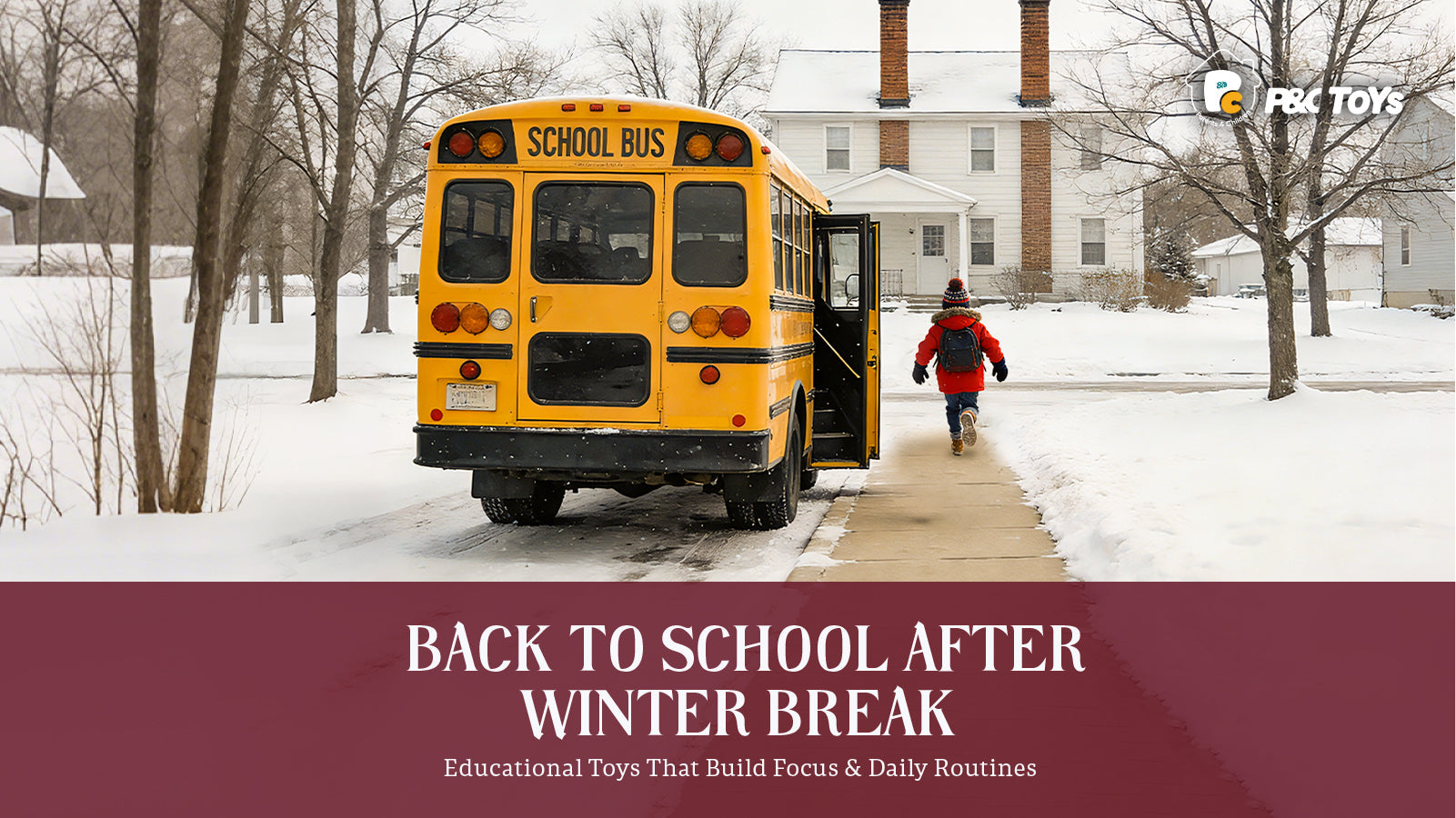
Back to School After Winter Break: Educational Toys That Build Focus & Daily Routines
🎒 After Winter Break — Finding Our Way Back to Focus ❄️
If you’re shaping a new year routine for kids, a small selection of well-chosen educational toys for toddlers and learning toys for toddlers can help children ease back into learning with more calm and confidence. 💛
🌱 How Focus Develops — A Gentle Learning Perspective
-
Repetition that feels safe and familiar
-
Small successes they can clearly see and feel
-
Tasks that feel achievable, rather than overwhelming
The best preschool learning toys don’t ask children to sit still or “try harder.” They gently pull children into the moment. This is the heart of Montessori focus activities, where learning happens through exploration, independence, and a sense of calm confidence. 🌼

✨ Three Core Skills That Support Focus & Learning Routines
When children struggle to stay focused, it’s rarely about willpower. Focus is built through a small set of foundational skills that grow over time, through play. Among them, three stand out again and again: logical thinking, hand–eye coordination, and sorting skills. Together, they help children understand what to do, stay with an activity, and feel confident in the process.
🧩 Logical Thinking — Learning to Think Step by Step
-
Building block toys and magnetic tiles
-
Structured construction activities
-
Simple problem-solving challenges
-
“Can you build something tall enough for this figure?”
-
“Can you make a bridge strong enough for a car?”
This kind of open-ended challenge helps children plan, adjust, and try again. Over time, it strengthens both focus and confidence. That’s why focus building toys, educational toys, and STEM toys for toddlers are so often recommended for developing early thinking skills.
🎯 Hand–Eye Coordination — Focus Through Movement
-
Control-based play, such as aiming, steering, or guiding
-
Push, pull, and turning motions
-
Fine motor skills toys and fine motor toys, including beginner-friendly RC cars for toddlers
🧺 Sorting & Categorizing — Building Order in the Mind
-
Matching by color, shape, or size
-
Categorizing objects into groups
-
Following basic placement rules
Parents don’t need to correct every result. Offering simple guidelines and observing the process is often enough. This low-pressure approach works beautifully with Montessori toys for toddlers, classic preschool toys, and other educational toys for preschoolers that emphasize independence, exploration, and calm focus.

🏡 Educational & STEM Toys That Support Focus at Home
-
STEM toys encourage logical thinking and problem-solving
-
Building block toys invite longer stretches of concentration
-
Montessori-style toys support independent, self-directed exploration
-
Creative and quiet time activities help children slow down and focus calmly
-
Afternoon play helps reset focus after school
-
Evening play supports a calmer transition toward bedtime
-
Weekend play allows for deeper, more open-ended exploration
Using educational toys and preschool learning toys this way helps families reduce clutter, simplify choices, and get more learning value from the toys they already have — without adding more to the shelf.
🕒 Turning Play into a Learning Routine After Winter Break
-
A fixed daily focus play time
-
A small, clearly defined selection of toys
-
A shared clean-up moment at the end
Together, these steps create a complete learning loop. Over time, these small, predictable habits support independence and toddler organization habits, while gently reinforcing a back to school routine after winter break that feels natural, calm, and easy to sustain.

💛 A Calm Start Leads to Confident Learning
Discover toys designed to support focus, curiosity, and everyday learning routines — even after winter break.
Q&A
Q1. How do I get kids back into a routine after the holidays?
A: The best way to rebuild a routine after the holidays is through consistency and predictable daily rhythms. Short, screen-free learning sessions using educational toys for toddlers or preschool toys help children ease back into focus without pressure. A simple new year routine for kids works better than strict schedules.
Q2. What are good screen-free activities for toddlers and preschoolers?
A: Screen-free activities that work well include building blocks toys, fine motor skills toys, sorting games, and quiet time activities like puzzles or open-ended play. These activities support attention and learning while keeping play calm and manageable indoors during winter.
Q3. How do educational toys help child development?
A: Educational toys support child development by encouraging problem-solving, fine motor skills, and independent thinking. Preschool learning toys and educational toys for preschoolers help children build focus, confidence, and early learning habits through hands-on exploration rather than passive instruction.
Q4. At what age should a child start playing with STEM toys?
A: Many children can start exploring STEM toys as early as toddlerhood. Simple STEM toys for toddlers, such as toy building blocks or cause-and-effect toys, introduce problem-solving and logical thinking in an age-appropriate way.
Q5. Why are building blocks good for toddlers?
A: Building blocks toys help toddlers develop fine motor skills, hand-eye coordination, and early problem-solving abilities. They also support open-ended play, allowing children to build, test, and adjust ideas at their own pace.