

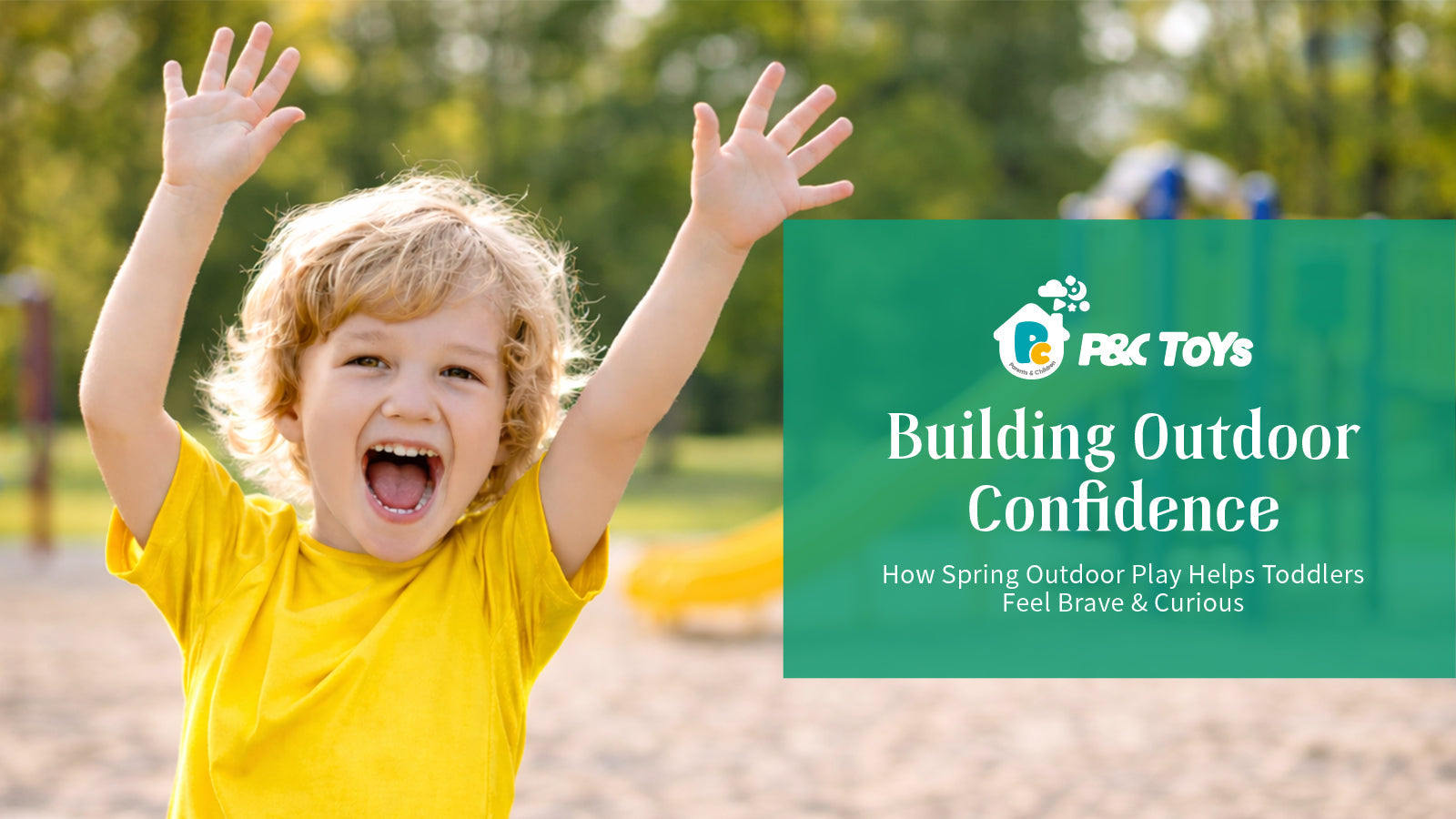
Building Outdoor Confidence: How Spring Outdoor Play Helps Toddlers Feel Brave & Curious
🌿 Spring Is a Key Season for Building Outdoor Confidence
If your toddler has been wanting to stop at every flower, crouch down to touch the grass, or stare at bubbles floating in the breeze, spring is probably already working its quiet magic. The weather feels softer, the days get longer, and the world outside becomes easier to step into. For many families, this is when outdoor play for toddlers starts to feel possible again.
That is what makes spring such a helpful season for building outdoor confidence for kids. For little children, feeling comfortable outside is rarely something that appears all at once. It usually grows through small, safe, manageable experiences repeated over time. Compared with winter or the heat of midsummer, spring often gives children a gentler starting point for spring outdoor activities and early spring outdoor development.
The goal is not to make a child suddenly fearless. It is to help them feel a little more comfortable outside, a little more willing to explore, and a little more ready to come back and try again.
🌤️ Why Some Kids Hesitate Outside — and Why That’s Completely Normal
A lot of parents quietly wonder the same things: Why does my toddler hate playing outside? Why is my toddler suddenly afraid of going outside? Why is my toddler scared of grass or dirt? In many cases, it is less about dislike and more about feeling unsure outside.
For some toddlers, the outdoor world simply feels big, new, and a little unpredictable. Wind moves things. Sounds come from different directions. Grass, dirt, and uneven ground can feel unfamiliar. This can be especially true for a highly sensitive child during outdoor play, when textures, movement, and noise feel stronger than adults expect. What looks like a fear of grass in toddlers is often just a child trying to make sense of new sensory information.
Other children hesitate because they are not quite sure what to do with their bodies outside. They may want to join in, but worry about falling, not keeping up, or not knowing how to begin. And some toddlers simply need more warm-up time — they watch first, stay close, and move in slowly.
That is why it helps to remember this: hesitation is not resistance — often, it is just adjustment. When parents reframe toddler outdoor anxiety this way, it becomes easier to respond with patience instead of pressure.

✨ Three Gentle Ways to Help Kids Feel Braver Outside
If you have ever found yourself wondering, How do I help my child feel comfortable outside? the answer is usually not to push harder. More often, it helps to make the first steps feel smaller, calmer, and easier to manage.
Start Small and Make the First Step Easy 💡
One of the best ways to encourage outdoor play is to make the first few steps feel easy for toddlers. You do not need a big outing to get started. Stand outside the front door for a minute. Spend ten quiet minutes in the backyard. Watch one bubble drift by. Walk to the mailbox and back.
For many families, this is also the gentlest answer to how to get a toddler to play outside. Confidence grows faster when the first experience feels manageable. When a child enjoys one easy moment, they are much more likely to stay open to the next one.
Let Kids Observe Before They Join 🧐
Not every child wants to jump into outdoor games for toddlers right away, and that is completely okay. Watching is part of the process. Looking at how bubbles move, touching grass with one finger, or noticing another child running across the park can all be meaningful first steps.
This matters in nature play for toddlers, especially after a season of spending more time indoors. Observation is not delay — it is often the beginning of feeling safe enough to join. When children are allowed to warm up at their own pace, they usually move into play more naturally.
Praise Effort, Not Fearlessness 💛
It is tempting to say, “Be brave” or “Don’t be scared.” But for hesitant toddlers, gentler language often works better.
Try:
-
“You tried something new.”
-
“You stayed with it.”
-
“You went a little farther today.”
These small responses help children feel seen. Outdoor confidence grows when effort is noticed, not when boldness is demanded. For children who feel shy, cautious, or easily overwhelmed outside, that kind of encouragement can make a real difference.
🌷 Toys and Play Setups That Encourage Balance Chasing and Exploration
Alongside gentle encouragement, the right kind of play can also make outdoor confidence easier to build. For some toddlers, toys are not just for fun — they are a helpful bridge between feeling unsure and feeling ready to join in.
The best outdoor toys for toddlers are usually not the most complicated ones. They are the ones that invite movement, spark curiosity, and make small wins feel easy to reach.
Bubble Toys for Easy Movement 🫧
Bubble toys are often the easiest place to begin. A bubble machine gives toddlers something playful to watch, reach for, and chase without needing complicated rules. That is why bubble play can feel like one of the most natural active play toys to build confidence.
RC Cars for Toddlers Who Like Control 🏎️
Some children feel more comfortable outside when play has a clear direction. RC cars for toddlers can help by giving them something simple to follow, guide, and focus on. They can be especially helpful for younger toddlers because they combine movement with a clear sense of direction.

Simple Props That Keep Play Flexible 🌈
A basket, a chalk line, a soft target, or a few objects to collect can turn an ordinary yard into easy backyard activities for toddlers. These kinds of outdoor sensory toys and open-ended setups also work well as outdoor toys for shy or hesitant toddlers, because the level of challenge can be adjusted so easily.
The best outdoor confidence-building toys are not the ones that do the most — they are the ones that gently encourage movement, exploration, and little moments of success.
💚 Outdoor Confidence Grows One Small Step at a Time
Outdoor confidence does not appear all at once. For many toddlers, it grows quietly — through small steps, safe experiences, and playful moments that feel manageable enough to try again.
Spring can be a gentle season for that kind of growth. With softer weather, more chances for spring outdoor play, and a little patient support from the adults around them, children can begin to feel more comfortable outside in their own time. What looks like hesitation today may slowly turn into curiosity, familiarity, and the confidence to explore a little more tomorrow.
And often, that is what really matters — not raising fearless children overnight, but helping them feel safe enough to step closer, stay a little longer, and discover that the outdoors can be a place of joy.
Create Infinite Fun Together.
Q&A
Q1. Why is my toddler suddenly afraid of going outside?
A: Sometimes it is less about dislike and more about feeling unsure outside. Changing light, wind, open space, and unfamiliar sounds can all make outdoor play for toddlers feel overwhelming at first, especially after spending more time indoors. Gradual exposure usually works better than pressure.
Q2. Why is my toddler scared of grass or dirt
A: Grass, dirt, and uneven ground can feel strange to toddlers who are still adjusting to new outdoor textures. What looks like a fear of grass in toddlers is often a sensory response, so it helps to start small and let your child explore through short, low-pressure nature play for toddlers.
Q3. How do I get my toddler to play outside?
A: The easiest way is usually to make the first step feel simple and manageable. Instead of planning a big outing, start with ten quiet minutes in the backyard, one small mission, or a familiar toy that helps encourage outdoor play in a way that feels safe and fun.
Q4. What are the best toys to encourage outdoor play?
A: The best toys to encourage outdoor play are usually the ones that invite movement or give children a simple sense of control. Bubble toys, a bubble machine, and beginner-friendly RC cars for toddlers can all help because they make outdoor time feel playful, low-pressure, and easier to join.
Q5. How much outdoor time does a toddler need?
A: For toddlers, quality often matters more than quantity. Even 10 to 15 minutes of positive spring outdoor play can be meaningful if your child feels comfortable, curious, and willing to try again the next time.