


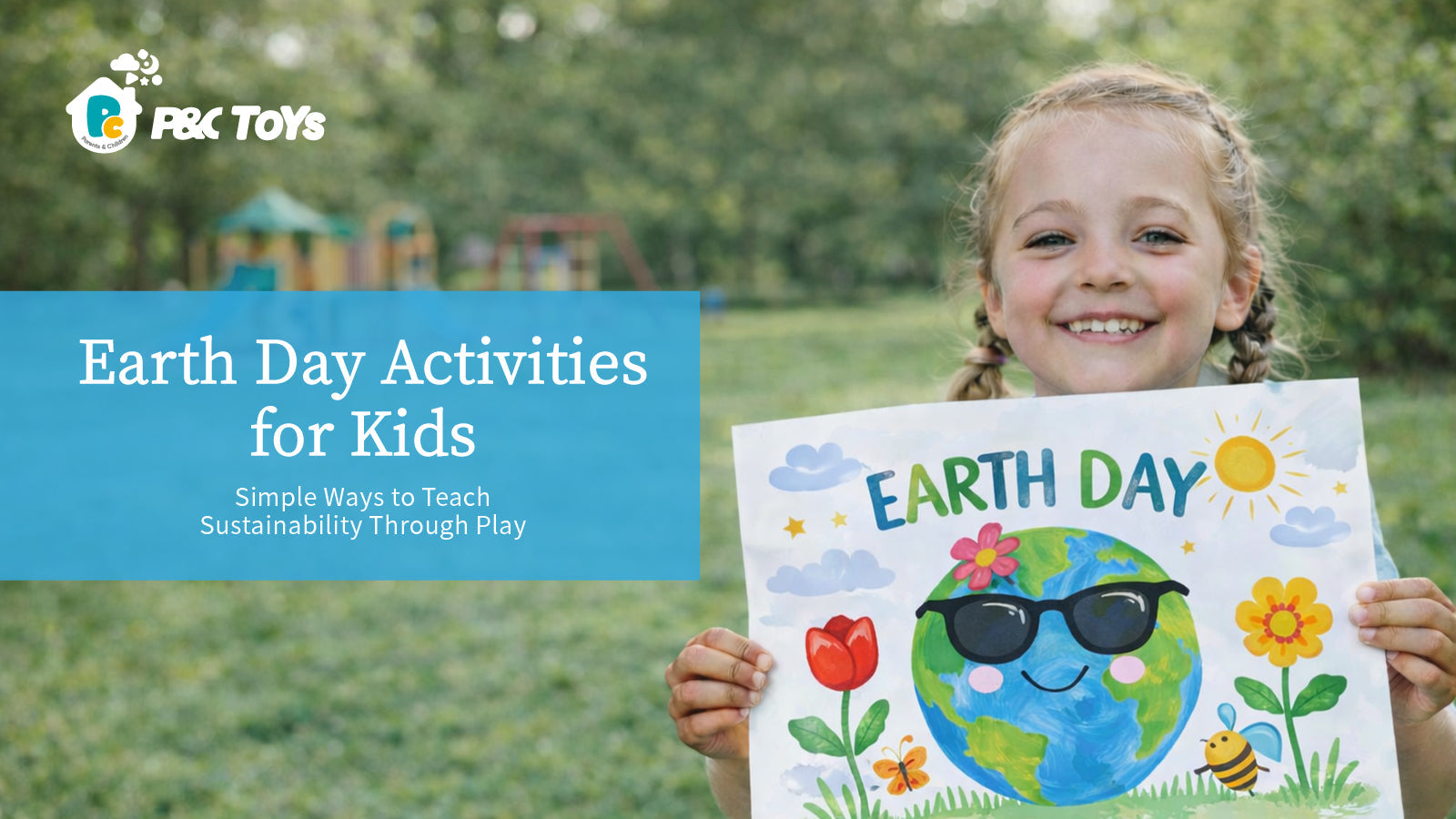
Earth Day Activities for Kids: Simple Ways to Teach Sustainability Through Play
🌍 Why Earth Day Matters Even for Young Kids
When people think about Earth Day, they often imagine big ideas like climate change or recycling systems. It can sound a little too complex for young children. But in reality, kids already understand more than we think — just in simpler, more natural ways.
They notice that plants need water, that flowers grow and change, that the wind moves things, and that some items can be used again. These small everyday experiences are already part of how sustainability begins for kids.
That is why Earth Day activities do not have to feel like lessons. They can simply be moments where children begin to notice and care. For families wondering how to celebrate Earth Day with kids, the goal is not to teach everything at once, but to help children feel that the world around them matters — and that they are part of it 🌱

🌼 Simple Earth Day Activities for Toddlers, Preschoolers, and School-Aged Kids
For young children, Earth Day does not need to begin with big explanations. It often begins with simple experiences — noticing a flower, feeling the wind, sorting familiar objects, or using play to look a little more closely at the world around them. That is what makes these Earth Day activities so helpful: they turn a big idea into something children can actually see, touch, and enjoy.
👀 For Toddlers: Sensory Play and Gentle Nature Discovery
For younger children, Earth Day works best through movement, touch, and simple observation. These Earth Day activities for toddlers do not need a lot of setup — just a chance to explore slowly and repeat what feels interesting.
- Take a Nature-Noticing Walk 🌿 A short walk in the backyard, at the park, or even along the sidewalk can become one of the easiest nature walk activities for toddlers. Point out flowers, leaves, tree shadows, or the way the wind moves branches, then ask simple questions like “What do you see?” or “What feels soft or rough?”
- Construction Play with Sand, Stones, and Nature Materials 👋 Using a construction truck set, toddlers can scoop sand, move small stones, or carry leaves from one place to another. This kind of backyard nature exploration helps children experience texture, weight, and movement through hands-on play.
- Water-and-Leaf Scoop Play 💧 Fill a small tub or bowl with water, then add a few leaves, petals, or safe natural items for toddlers to scoop, pour, and move around. This kind of simple parent-child play feels calm and sensory-rich, and it helps little ones notice how water moves and how different objects float or sink.
🧩 For Preschoolers: Sorting, Watching, and Asking Questions
Preschoolers are ready for a little more structure and simple problem-solving. At this stage, preschool children often enjoy Earth Day activities that involve sorting, comparing, and noticing how things change.
- Try a Simple Recycling Sort ♻ Gather safe materials like paper, boxes, and plastic containers, then let children group them in their own way. The goal is not perfect sorting, but helping them understand that some things can be reused, saved, or sorted again — a gentle beginning to reuse and recycle activities for kids.
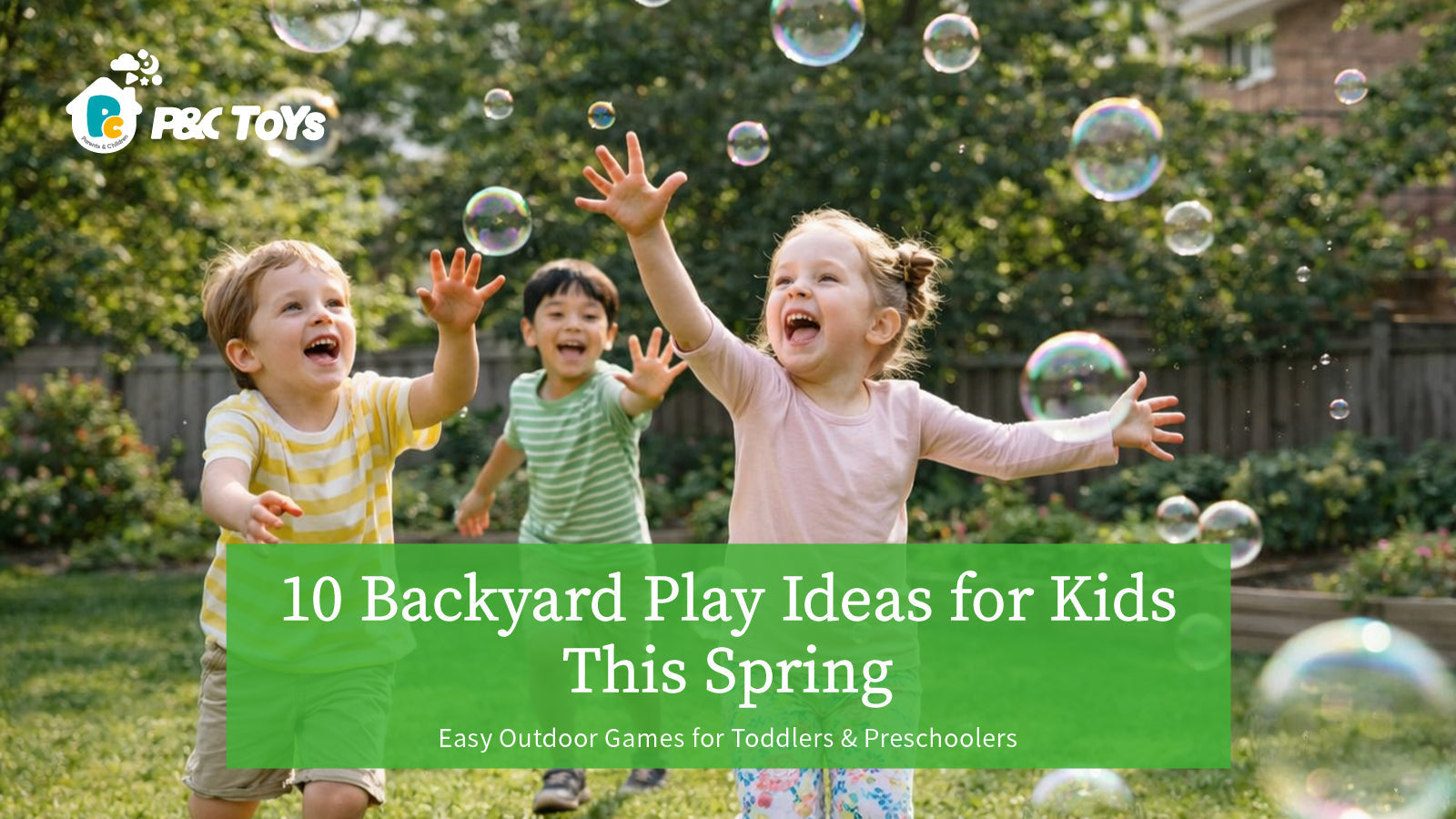
- Bubble Play for Wind, Light, and Observation 🫧 Bubble play is not just for chasing. Using a bubble machine, bubble gun, or bubble wand, children can watch where the wind carries the bubbles, notice how sizes change, and see how sunlight affects color and movement. It gently turns active play into observation, making it one of the most playful Earth Day activities outside for spring.
- Nature Color Hunt 🎨 Pick two or three spring colors together, then look around the backyard or park to find them in flowers, leaves, stones, or outdoor toys. This is an easy way to turn an ordinary walk into a shared game, while helping preschoolers observe nature more closely and talk about what they see.
🔍 For School-Aged Kids: Outdoor Observation and Simple Exploration
Older children often enjoy more independence and a little more challenge. For this age group, Earth Day can become a chance to explore how nature works through movement, testing, and observation.
- Explore Wind Through Play 🌬 Use ribbons, pinwheels, or lightweight outdoor items to watch how the wind changes direction and strength. This kind of activity encourages children to slow down, compare what they see, and ask their own questions about the natural world.
- RC Play for Direction, Speed, and Outdoor Awareness 🚗 In the backyard or at the park, children can use RC cars to observe how grass, pavement, slopes, or wind affect speed and turning. These small discoveries make play feel more meaningful and show how toys that encourage outdoor exploration can support real-world noticing.
- Backyard Earth Day Challenge Card 🌎 Create a few simple challenge cards together, like “Find something moving,” “Spot three different textures,” or “Pick up and sort five reusable items.” This makes Earth Day feel more interactive, and it gives older kids a fun way to explore, observe, and share their discoveries with family.
Across all ages, the most meaningful Earth Day activities are often the ones that feel like playful discovery instead of a lesson.

♻️ Teaching “Use with Care, Not Waste” Through Everyday Play
After simple Earth Day activities, the next step is often much smaller and more everyday: helping children learn how to care for the things they already use and love. That is where sustainability for kids can start to feel real — not as a big lesson, but as a gentle family habit.
One of the easiest ways to begin is by teaching children to take care of what they already have. Putting toys away after play, wiping them clean, and keeping them organized makes responsibility feel concrete and doable. For young children, this is often one of the first steps in teaching toddlers not to waste.
It also helps to choose play that lasts beyond a single moment. Toys that can be used in different ways — like bubbles in outdoor games or vehicles used for movement and exploration — tend to stay meaningful longer. These kinds of choices support more eco-friendly play ideas without making play feel restricted.
Another gentle habit is learning to reuse and repurpose. Baskets, boxes, Easter eggs, and natural materials can all become part of play again and again. Over time, children begin to see that not everything needs to be new to be fun, and that is often how sustainable play habits for kids begin to take shape.
For young children, sustainability does not need to be perfect. It simply starts with care, reuse, and appreciation 💛
🌈 Small Moments Can Grow Into Lasting Habits
Earth Day does not have to feel big or complicated for young kids. A simple walk, a small sorting game, a moment of noticing the wind, or learning to care for a favorite toy can all help children grow into a deeper sense of care for the world around them.
What matters most is not doing everything at once, but creating small experiences children can return to and remember. Over time, those little moments of play, care, and observation can grow into habits that feel natural, meaningful, and lasting.
Create Infinite Fun Together.
Q&A
Q1. How do you explain Earth Day to a toddler?
A: For toddlers, Earth Day is easiest to explain through simple ideas they can already feel and see. You can say that the Earth is our shared home, and that taking care of nature is a lot like taking care of our toys, our garden, and the spaces we use every day.
Q2. What are some Earth Day activities for kids?
A: Some of the most meaningful Earth Day activities are also the simplest: a nature-noticing walk, a recycling sort, bubble watching in the wind, or a small scavenger hunt in the backyard. For young children, playful and visible activities often work best because they turn big ideas into something they can actually enjoy and repeat.
Q3. How does outdoor play connect kids to nature?
A: Outdoor play helps children notice how the natural world moves, changes, and feels. When kids watch bubbles drift, touch leaves and stones, or see how wind changes direction, Earth Day activities outside become a hands-on way to build curiosity and connection.
Q4. How do you teach a child not to waste?
A: The easiest way is to start with care rather than lectures. When children learn to put toys away, keep materials organized, reuse simple objects, and play with what they already have, they begin to understand waste less as an everyday habit.
Q5. How do you celebrate Earth Day at home with kids?
A: A simple Earth Day at home can include a short nature walk, a recycling game, a little reuse craft, or even just taking time to notice the weather, wind, and plants together. For many families, how to celebrate Earth Day with kids does not need to feel big — it works best when it feels low-pressure and easy to repeat.
Q6. How can kids learn to respect nature?
A: Children often learn respecting nature for kids through repeated small experiences, not abstract explanations. Watching flowers grow, feeling the wind, noticing outdoor textures, and learning to care for the things they use all help build a quieter, lasting sense of care for the world around them.