


Kindergarten Readiness Beyond ABCs: 5 Everyday Skills That Help Kids Feel Ready for School
🎒 Kindergarten Readiness Is More Than an Academic Checklist
As kindergarten gets closer, it is natural to wonder whether your child is “ready enough.” Do they know their letters? Can they count? Should they already be practicing writing their names?
These early learning milestones are part of kindergarten readiness, but they are only one part.
A kindergarten day also asks children to move between activities, keep track of their belongings, tell an adult when they need help, follow simple directions, and play alongside other kids.
So instead of asking only “What should a child know before kindergarten?”, try asking:
“What everyday things will help my child feel more comfortable once they get there?”
That does not mean leaving academics behind. Colors, words, numbers, and early language still matter. But for preschoolers, they do not always need to come from worksheets. Everyday routines and learning through play can make kindergarten prep feel much more natural.
Here are five kindergarten readiness skills to start with.

🌟 5 Everyday Skills That Help Kids Feel Ready for Kindergarten
Kindergarten readiness often shows up in the small things children do every day—not just in what they can name, count, or write. These five everyday skills can help preschoolers feel more comfortable with the routines, choices, and interactions that come with a new school day.
⏰ 1. Get Comfortable With Simple Routines
Kindergarten comes with lots of little transitions: hang up your backpack, sit down for an activity, clean up, wash hands, eat snacks, and move on.
Children do not need a strict school-style schedule at home, but familiar routines can help them understand that one part of the day ends and another begins.
Keep it simple. A backpack can always go by the door. Shoes can have the same spot. Toys can be put away before another activity comes out.
You can also give a little warning before transitions:
“Five more minutes, then we’re cleaning up for dinner.”
Small routines make “what happens next” easier to understand and can make the rhythm of a school day feel more familiar.
🙌 2. Practice Doing Little Things Independently
Independence at this age is not about doing everything without an adult. It is about having the chance to try.
Useful independence skills for kids can be very ordinary:
-
👟 Putting on simple shoes
-
🥨 Opening a snack container
-
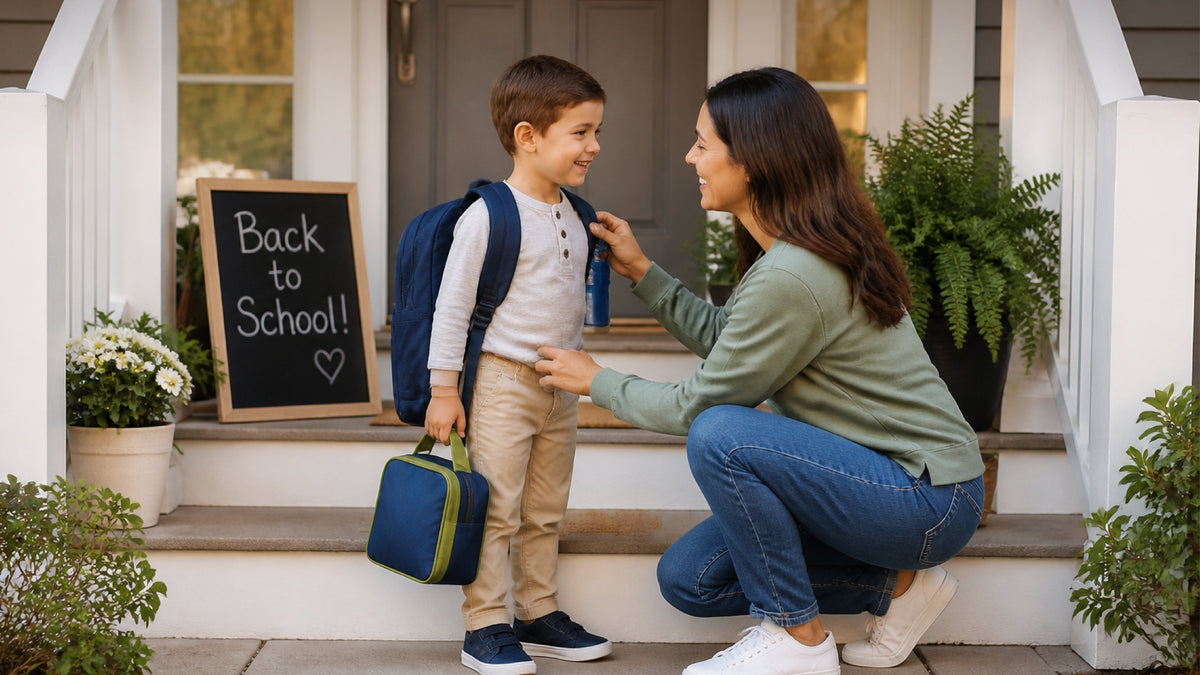
🎒 Carrying and putting away a backpack
-
🧸 Returning toys to their place
-
🧼 Washing and drying hands
These self-help skills for preschoolers often show up naturally throughout a kindergarten day.
If your child struggles, help when needed and give them another chance next time. The goal is not “You should already know how.”
It is closer to:
“Give it a try. I’m here if you need me.”
Independence is practice, not perfection.
💬 3. Know How to Ask for Help and Express Needs
Sometimes independence means knowing when not to do something alone.
At school, a child may need to tell a teacher that they cannot open something, do not understand a direction, or need the bathroom. Speaking up in a new classroom can feel like a big step.
Practice a few simple phrases at home:
“Can you help me?”
“I don’t understand.”
“Can you show me again?”
“I need the bathroom.”
Pretend play can make this easier. Maybe a stuffed animal cannot open its lunchbox, or a toy dinosaur does not know where to put its backpack. Ask your child, “What could they say to the teacher?”
A useful kindergarten readiness checklist should leave room for this kind of communication too—not only letters and numbers.
👂 4. Follow Simple Directions Without Turning It Into a Drill
A school day includes plenty of directions, and sometimes more than one step at a time.
For preschoolers, simple one- and two-step directions are easy to work into normal play:
-
🧱 “Find a yellow block and put it on top.”
-
🚗 “Drive the car around the chair, then park it by the couch.”
-
🧸 “Put the bear in the basket, then choose a book.”
These are simple following directions activities, but they do not feel like exercises because your child is already doing something they enjoy.
Start with one step and add another when it feels comfortable. The goal is not perfect listening—it is getting used to hearing a direction, remembering what comes next, and giving it a try.
👫 5. Get Used to Waiting, Taking Turns, and Playing Together
Kindergarten is a group experience. Children share materials, wait for turns, join activities, and discover that other kids may have very different ideas about how a game should go.
Normal family play offers plenty of practice.
Build a tower together and take turns adding pieces. Race toy cars one at a time. Let each person choose the next song. Take turns chasing bubbles or deciding the next pretend-play idea.
Some days, waiting thirty seconds for a turn may feel like the greatest injustice a four-year-old has ever experienced. 😅 And that is okay.
These simple kindergarten readiness activities help children become more familiar with waiting and shared play. They do not need to become perfect sharers before school—just have chances to practice being part of the fun when they are not always the one in control.

🧩 Keep Kindergarten Prep Playful
Getting ready for kindergarten does not have to mean choosing between academics and everyday skills.
Preschoolers can still explore colors, words, simple sentences, music, numbers, and early concepts—just in ways that feel natural to them. That is where learning through play can help.
🦕 With the Dinosaur Cartoon Truck, children can press buttons to hear colors, words, simple sentences, and music while pushing and playing with the truck. For families exploring preschool learning toys, it is a simple example of early learning happening inside an activity a child already wants to repeat.
The learning is still there—it just feels like play.
🧱 Translucent Building Blocks offer another kind of practice. Kids can choose pieces, follow a simple idea, finish a small creation, and help clean up afterward. Building toys for kids naturally leave room for independence and simple directions.
🫧 With the Bubble Factory, shared play can be as simple as counting down before the bubbles start, taking turns choosing where to stand, or playing “pop five, then switch.”
None of these moments need to be labeled as school practice. They are simply part of play.
✨ Ready for Kindergarten, One Little Step at a Time
The most useful kindergarten readiness skills are not all things a child can recite or write down.
Some look like putting away a backpack. Some sound like “Can you help me?” Others happen while waiting for a turn, following a simple direction, or trying something independently.
Academics still have a place. So does play.
When early learning, everyday routines, and small moments of independence grow together, kindergarten prep can feel much less like a checklist—and much more like childhood. 🎒🌈
Create Infinite Fun Together.
Q&A
Q1: What should my child know before kindergarten?
A1: Kindergarten readiness is about more than letters and numbers. It also includes everyday skills like following routines, communicating needs, trying simple tasks independently, and playing with others.
Q2: How do I help my child get used to a school schedule?
A2: Start with a few predictable routines at home, such as getting dressed, putting away a backpack, or cleaning up before the next activity. Keeping these steps simple and consistent can make the rhythm of a school day feel more familiar.
Q3: What self-help skills should a child have before kindergarten?
A3: Helpful self-help skills for preschoolers include putting on simple shoes, washing hands, opening snacks, managing personal belongings, and trying to use the bathroom independently. Children do not need to master everything before school—the goal is to give them regular chances to practice.
Q4: How can I help my child ask for help at school?
A4: Practice short phrases like “Can you help me?” or “I don’t understand” during everyday situations or pretend play. Repeating these phrases in a familiar setting can help children feel more comfortable expressing their needs in a new classroom.
Q5: How can I prepare my child for kindergarten through play?
A5: Learning through play can turn everyday activities into simple kindergarten readiness activities. Building, pretend play, puzzles, and turn-taking games can give preschoolers natural opportunities to follow directions, make choices, practice independence, and learn alongside others.