


Outdoor Play for Kids: How to Encourage Independent Play This Summer
🌿 “Can You Play With Me?” The Summer Question Many Parents Know
Summer afternoons can feel long when kids are home all day. You finally sit down with a cup of coffee, start making dinner, or try to finish a few things around the house — and then you hear:
“Mom, can you play with me?”
“Dad, I’m bored.”
For many parents, this moment feels familiar. You love spending time with your kids, and you want to be part of their little adventures. But being the person who has to create every game, plan every activity, and answer every “what should I do?” can become tiring during a long summer break.
Many parents also wonder about independent play for kids. If children are encouraged to play on their own, does that mean parents are stepping away too much?
Not at all.
Independent play is not about leaving kids alone. It is about giving children the confidence and space to explore their own ideas while parents stay nearby and connected.
Summer is a natural time to practice this. With more chances for outdoor play for kids, a backyard, patio, driveway, or park can become a place where children move, imagine, and create their own games — while parents take a small step back without feeling like they are missing the moment.
🌱 Outdoor Play for Kids: How to Encourage Independent Play in Summer
Summer naturally creates more opportunities for outdoor play for kids. Compared with colder months, children are more willing to spend time outside, where simple activities like water play, bubbles, and nature exploration can easily keep them engaged.
These outdoor moments create a natural path toward independent play for kids. To encourage this kind of play, parents can focus on two simple things: creating a space that invites exploration and choosing activities or outdoor toys that let kids take the lead.
🏡 Create an Outdoor Space Where Kids Can Take the Lead
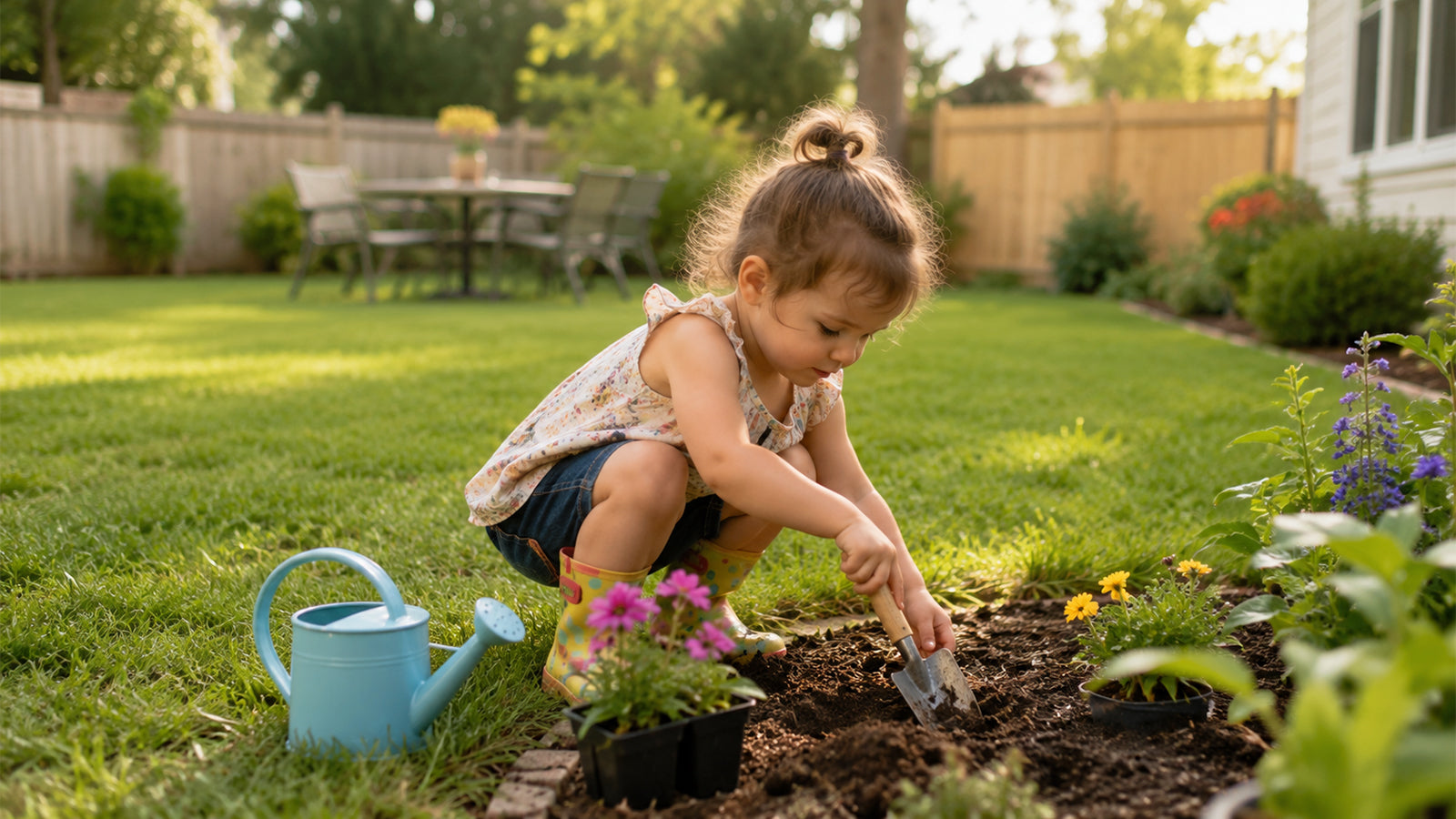
When creating outdoor activities for kids, many parents think they need a big backyard setup or expensive play equipment. But children often enjoy outdoor spaces more when they have room to explore and decide what happens next.
A simple outdoor area can become many things:
-
A driveway can become a race track.
-
A few buckets can become a pretend kitchen.
-
Leaves and rocks can become part of a treasure hunt.
-
A blanket on the grass can become a reading corner.
These simple setups encourage open-ended play, where children can create their own rules, change the way they play, and come back with new ideas each time.
Easy backyard activities for kids can start with things you already have:
-
sidewalk chalk for roads, maps, or games
-
buckets and containers for collecting nature items
-
simple sensory materials like water, sand, leaves, or rocks
-
toys that can be used in different ways
A good outdoor space does not need to be perfect. It just needs to give kids the chance to look around and think, “What can I do with this?”

🧸 Outdoor Toys That Encourage Independent Play
The best outdoor toys for kids are not always the ones with the most features. They are the ones that give children room to create their own games, try new ideas, and decide how they want to play.
Different types of toys can support different kinds of independent play for kids — from simple observation to creative storytelling and problem-solving.
🫧 Bubble Toys: Simple Fun Kids Can Create Themselves
Bubble play is one of the easiest ways to start outdoor play for kids.
A bubble machine for kids, a bubble wand, or other bubble toys can turn into different games depending on the moment:
-
chasing bubbles across the yard
-
counting bubbles or guessing where they will land
-
watching how bubbles move with wind and sunlight
-
making a simple DIY bubble solution and testing which bubbles last longer
-
creating different bubble wands or tools to see how bubble sizes change
There is no fixed rule for bubble play. Kids can simply follow their curiosity and create their own little games.
🚗 RC Cars: Turning Driving Into New Challenges
For kids who love vehicles, RC cars for kids can become more than a toy that moves. Different styles can create different types of outdoor play — from creating smooth driving routes to trying new challenges.
Children can create their own missions:
-
drawing roads with sidewalk chalk
-
making parking spots
-
building simple obstacle routes
-
creating a drift challenge with a driveway track
-
deciding where the car should “travel”
A drift RC car can turn the backyard into a mini challenge course, while licensed RC cars can inspire pretend driving games, car shows, or imaginary adventures based on real vehicle designs.
The same RC car can become a race car, rescue vehicle, delivery truck, or part of a bigger story. Through this kind of learning through play, kids can practice problem-solving while creating their own challenges.
🌱 Creative Toys & Pretend Play: Building Their Own Little World
Some of the best independent play starts with imagination.
A few simple toys can become a dinosaur adventure, construction site, restaurant, or outdoor town. Children are not just playing with the toy — they are creating the story around it.
That is what makes toys for independent play valuable. They leave enough space for children to make choices, build ideas, and explore at their own pace.

👀 How Parents Can Support Without Taking Over
Encouraging independent play for kids does not mean parents need to step away completely. Children still need connection and support — the difference is that parents can slowly move from being the person who creates every game to someone who gives children the space to explore their own ideas.
A simple approach is:
Start together → Step back → Stay nearby
You can help build the first part of an RC route, show your child how a bubble toy works, or set up a simple outdoor activity. Once they understand how it works, give them time to decide what happens next. Maybe they create a new challenge, change the rules, or turn a simple activity into something completely different.
Parents can also support self-directed play by offering small choices instead of taking over: “Do you want to draw with chalk or play with your cars?” “Do you want to build something or explore outside?”
Independent play does not need to start with long periods of time. A few minutes of exploring on their own is already a good beginning. With a safe space, simple activities, and parents who know when to step in and when to step back, children can gradually become more comfortable creating their own games.
☀️ Let Kids Explore, Let Parents Breathe
Summer does not have to be packed with activities from morning to night.
Some of the best summer activities at home come from simple moments — a backyard adventure, a creative challenge, a favorite outdoor toy, or a game children create by themselves.
With the right space and support, outdoor play for kids can become a chance to explore, imagine, and enjoy their own ideas.
For parents, it means finding a balance between being there when kids need you and giving them the confidence to discover what they can do on their own. ☀️
Create Infinite Fun Together.
Q&A
Q1:Why is summer a good time for independent play?
A1: Summer gives kids more flexible time to explore outside, try new activities, and create their own play ideas without a busy school schedule. With simple outdoor play for kids, children can practice decision-making, creativity, and problem-solving through everyday moments.
Q2:How does outdoor play help independent play?
A2: Outdoor spaces give children more room to move, observe, and explore at their own pace. Activities like backyard activities for kids, nature exploration, bubble play, or simple outdoor games can encourage self-directed play while parents stay nearby.
Q3:What is the parent’s role in independent play?
A3: Independent play does not mean parents need to step away completely. Parents can create a safe environment, offer simple choices, and provide support when needed while allowing children to lead their own play.
Q4:What toys support self-directed play?
A4:The best toys for independent play are usually open-ended toys that allow kids to create different ways to play. Outdoor toys for kids like bubble toys, sensory toys, and RC cars for kids can encourage imagination, challenges, and learning through play.
Q5:How do I build independent play skills?
A5: Independent play can start with just a few minutes at a time. Begin with familiar activities, stay nearby without taking over, and gradually give children more space to explore their own ideas through independent play for kids.