

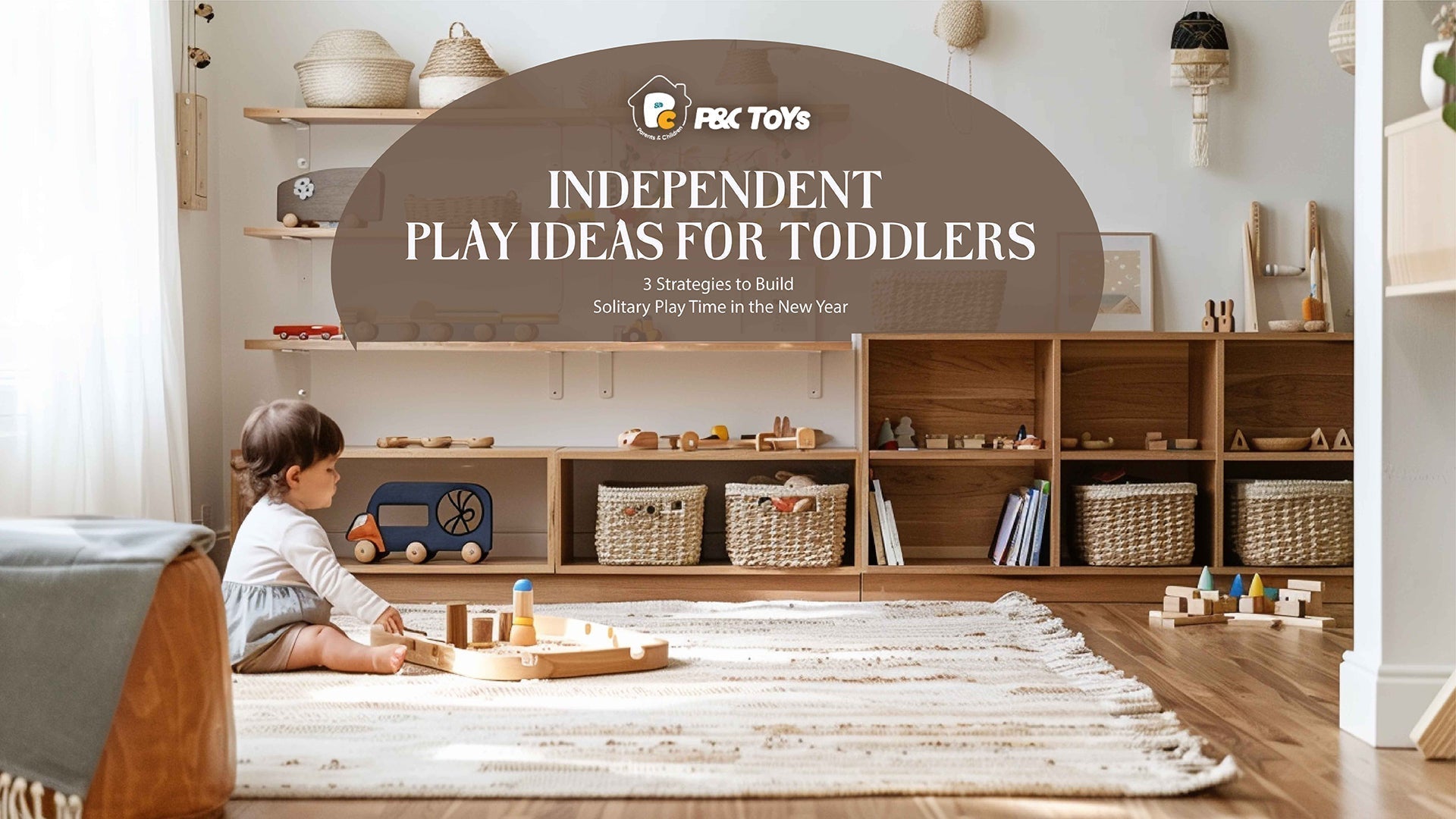
Independent Play Ideas for Toddlers: 3 Strategies to Build Solitary Play Time in the New Year
✨ Introduction — Why the New Year Is the Perfect Time to Start

🌱 How Independent Play Develops — A Gentle Learning Perspective
-
Safe and connected — they know you’re nearby
-
Grounded in a predictable environment — they understand what’s available and what to do next
-
Capable of completing small tasks — the activity feels doable on their own

💡 Three Simple Strategies Parents Can Copy
Control the Environment, Not the Child 🧸
When parents ask how to get toddler to play alone, the answer often starts with one change: reduce the number of choices.Too many toys can feel like freedom, but for toddlers it often creates overwhelm. A clutter-free playroom (or simply a clutter-free corner) makes starting easier.Start by shaping the space, not the behavior:- Choose one “independent play spot” — a rug, a play mat, a small table, or a corner shelf
- Put out only a few toys for independent play (think 4 – 6 items, not 20)
- Keep the choices consistent for a few days before swapping
If you’d like to explore how to set up a clutter-free playroom or build a simple toy rotation routine in more detail, you can also check out the two articles we shared earlier this month:
Reduce Distractions to Increase Focus 📵
If independent play feels difficult, distraction is often the hidden reason — especially after the holidays. During winter months, children spend more time indoors, and background stimulation quietly adds up: screens, noise, movement, and too many visual cues competing for attention.To support screen-free play for toddlers, start by reducing what’s happening around the play — not by asking your child to focus harder.A few small changes can make a noticeable difference:- Turn off background TV or music during playtime. Even if your child isn’t watching, constant sound pulls attention away.
- Put your phone out of sight. Toddlers notice it, even when it’s face down — and it often becomes the most interesting object in the room.
- Offer only 1–2 play options at a time, instead of a full shelf. Fewer choices make it easier to settle in and start.
Delay Intervention — Let Kids Try First ⏳
This strategy is the hardest — and the most powerful.When a child gets stuck, many parents jump in quickly (with love!). But for independent play to grow, toddlers need experience thinking: “I can try.”This is the heart of delaying intervention parenting.Try a simple pause-and-observe approach:- Pause for 5 seconds
- Watch what they attempt
- Offer a hint instead of a solution (asking “What happens if you turn it?”)
- Step back again
🧩 Toy Types That Support Independent Play
-
Clear goals
-
Repeatable actions
-
Open-ended possibilities.
-
Sorting & Matching Skills Clear structure builds confidence — “I know what to do.” Toy types: sorting toys for toddlers, matching games, shape sorters, peg boards.
-
Focus, Planning & Persistence Repeating actions and small challenges encourage children to stay with a task and try again. Toy types: puzzles, stacking toys, building block toys, magnetic tiles.
-
Fine Motor Skills & Hand–Eye Coordination Small, precise movements support quiet concentration and hands-on learning. Toy types: fine motor toys for toddlers, threading and lacing toys, RC cars for toddlers.
-
Creativity & Open-Ended Exploration Flexible materials allow play to evolve and last longer without adult direction. Toy types: open-ended toys for toddlers, figurines, play scarves, loose parts.

💛 Closing — Independent Play Is a Skill That Grows with Time
Independent play isn’t a trick — it’s a skill that grows with the right setup, fewer distractions, and time to try. For children, it builds focus, creativity, and self-regulation. For parents, it creates a calmer rhythm and a little breathing room in the day.The New Year is simply a good moment to start small and stay consistent. Independent play doesn’t need perfection — it just needs space to grow.Q&A
Q1. Why is my toddler so clingy after winter break?
A: After winter break, many toddlers become clingy because they’ve spent extended time with caregivers and haven’t yet rebuilt independent play routines. This behavior is common during a post-holiday reset for kids and doesn’t mean something is wrong. Gentle, screen-free independent play helps children regain confidence and separation skills over time.
Q2. At what age does independent play start for toddlers?
A: Independent play for toddlers often begins as early as 18 months, starting with short, simple activities. At this stage, independent play may only last a few minutes and works best with clear, manageable tasks. Over time, these moments naturally grow into longer solitary play periods.
Q3. How do I encourage my toddler to play alone without pushing them?
A: The best way to encourage independent play is by adjusting the environment rather than the child. Reduce distractions, offer a small number of clear play options, and stay nearby without directing the activity. This setup supports independent play for toddlers while maintaining a sense of security.
Q4. What toys keep toddlers busy for 20 minutes?
A: Toys that support longer independent play usually have clear goals, repeatable actions, or open-ended possibilities. Examples include sorting toys for toddlers, puzzles, building block toys, and fine motor toys. These types of toys help increase toddler attention span through calm, focused engagement.
Q5. How long should independent play be for toddlers?
A: Independent play doesn’t need to last long to be effective. Many toddlers start with 5–10 minutes of solitary play, especially during quiet time activities. With consistency and the right setup, independent play time can gradually increase to 15–20 minutes.